
 |
 |
 |


SOLD: 2013 TESLA MODEL S 85
(listed Jan 9, 2026)
Less than 83,500 miles
!!! Infamous large drive unit leak addressed - this is a must-do modification !!!
230+ Mile Range on a Full Charge
Clean Title in Hand
New 12v Battery
Unlimited Supercharging for Life (SC01)
Unlimited Premium Connectivity for Life
Tech Package and Smart Air Suspension
MCU2.5 Upgrade
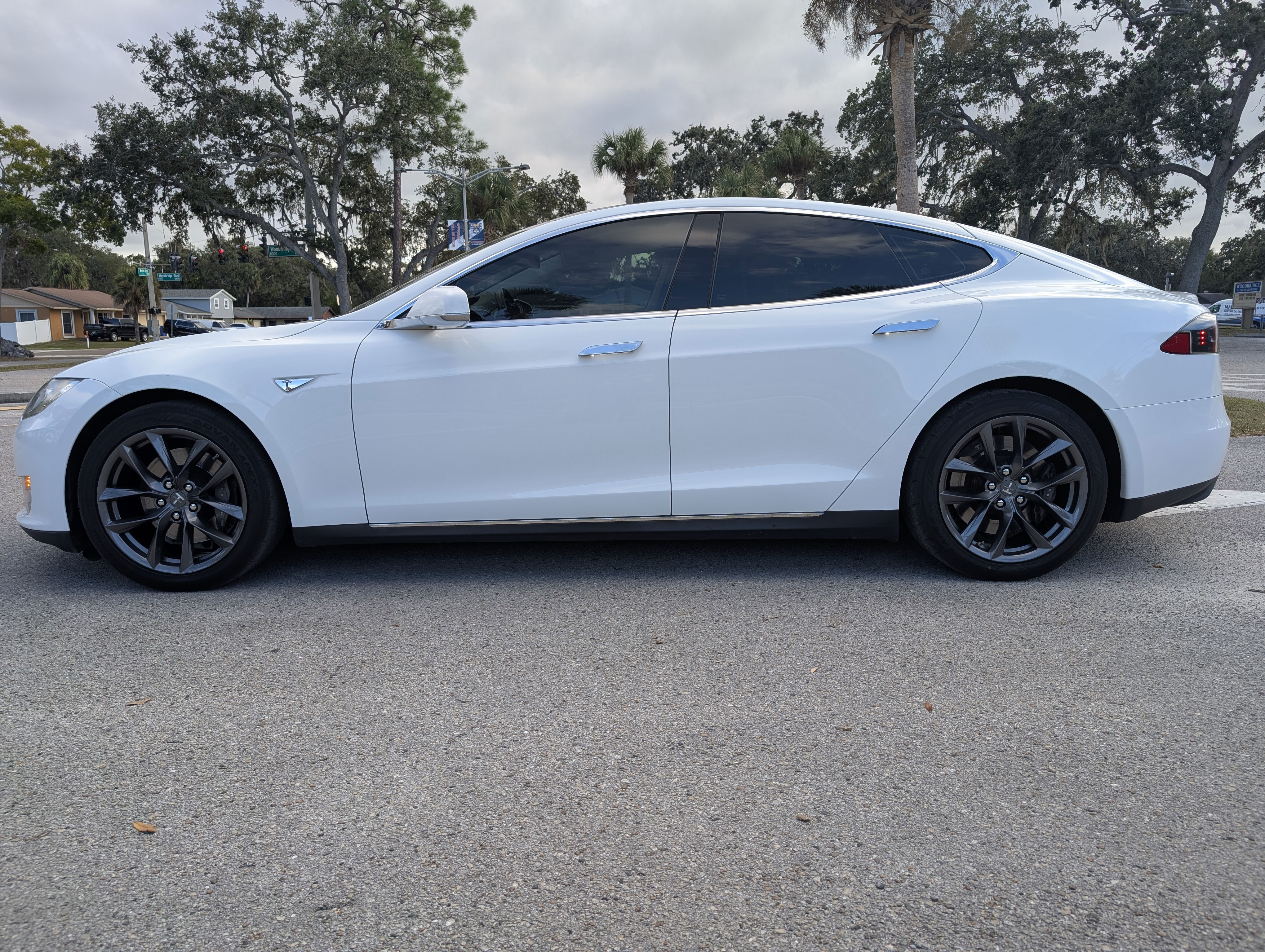
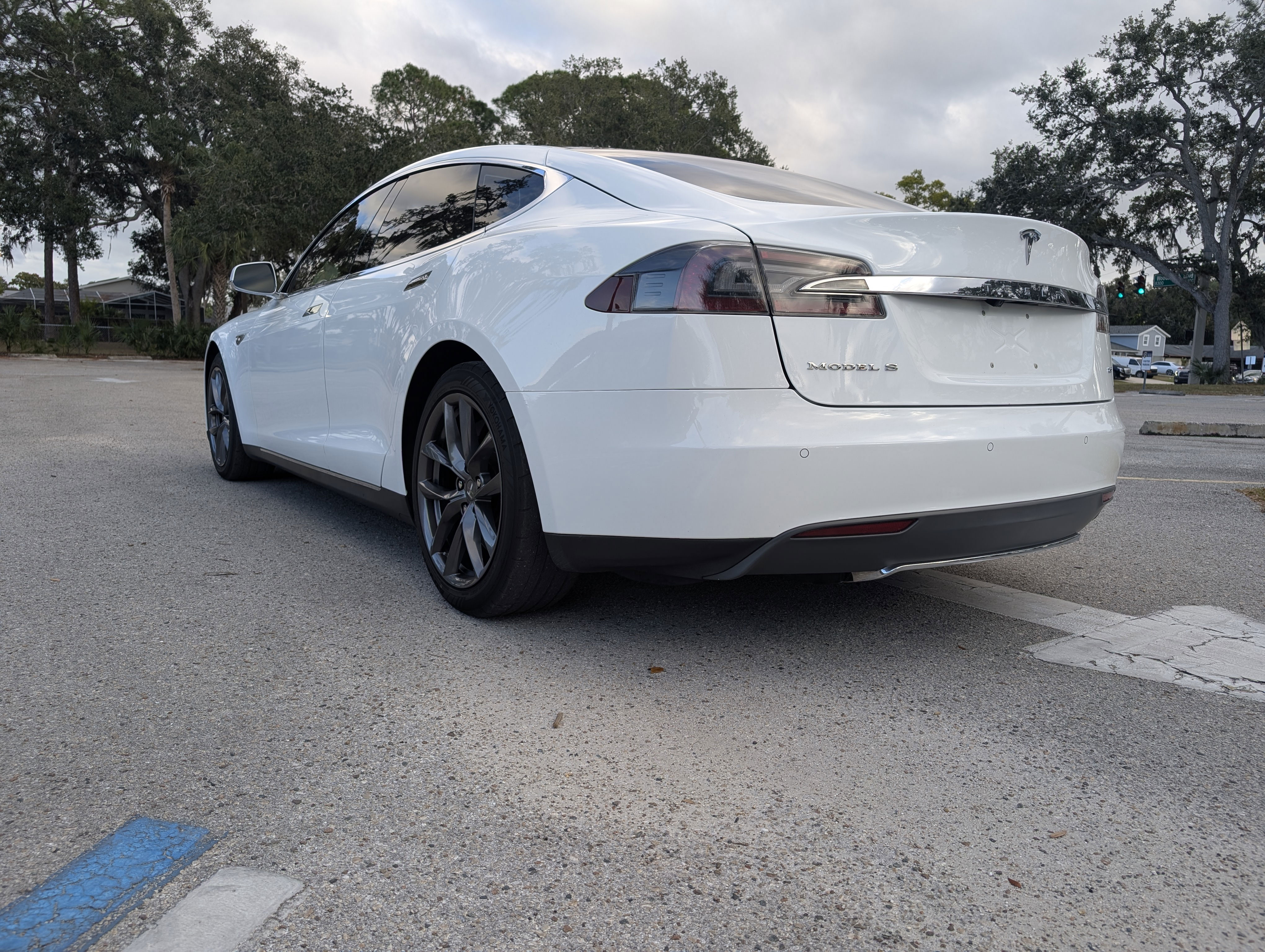
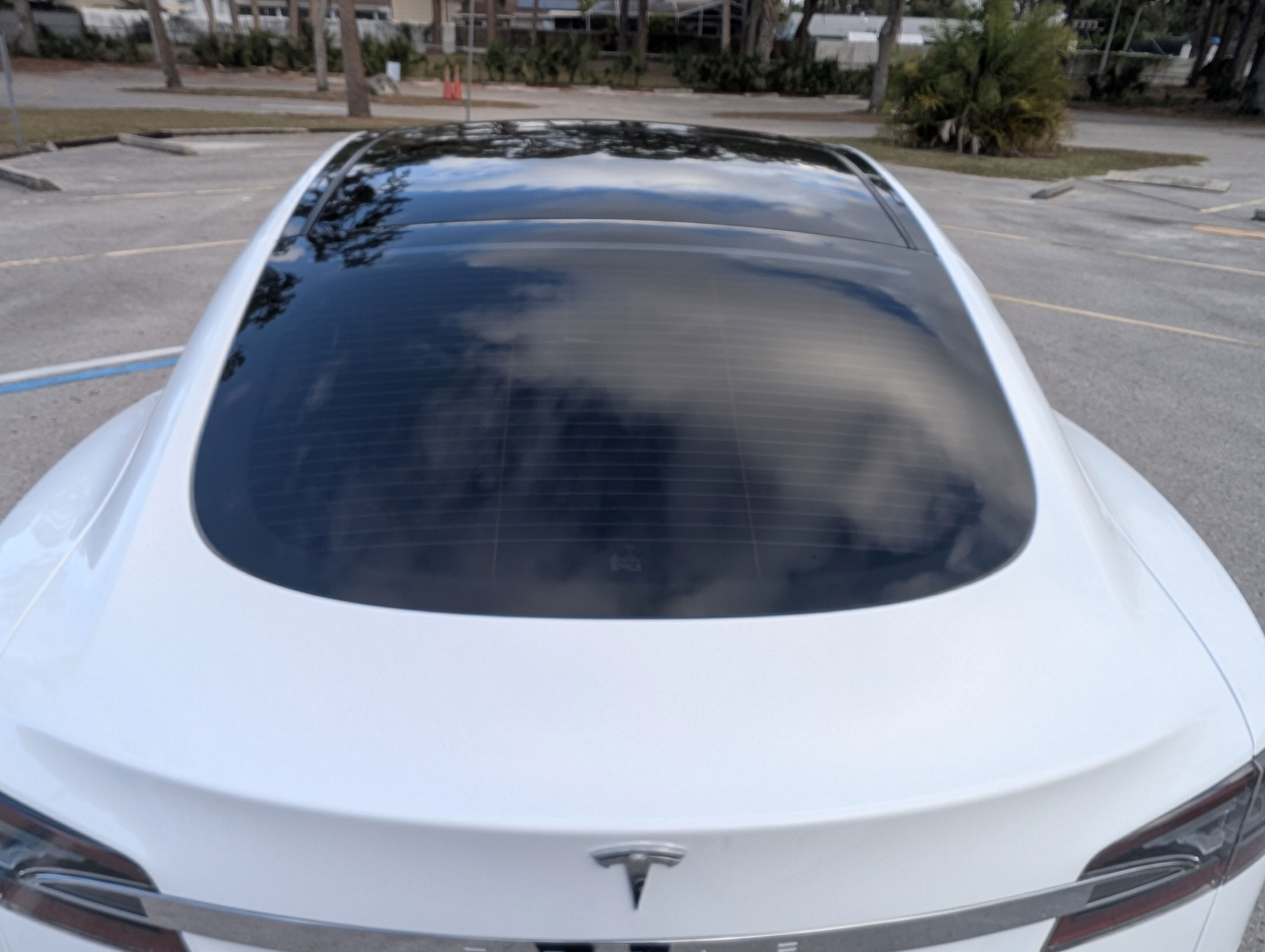
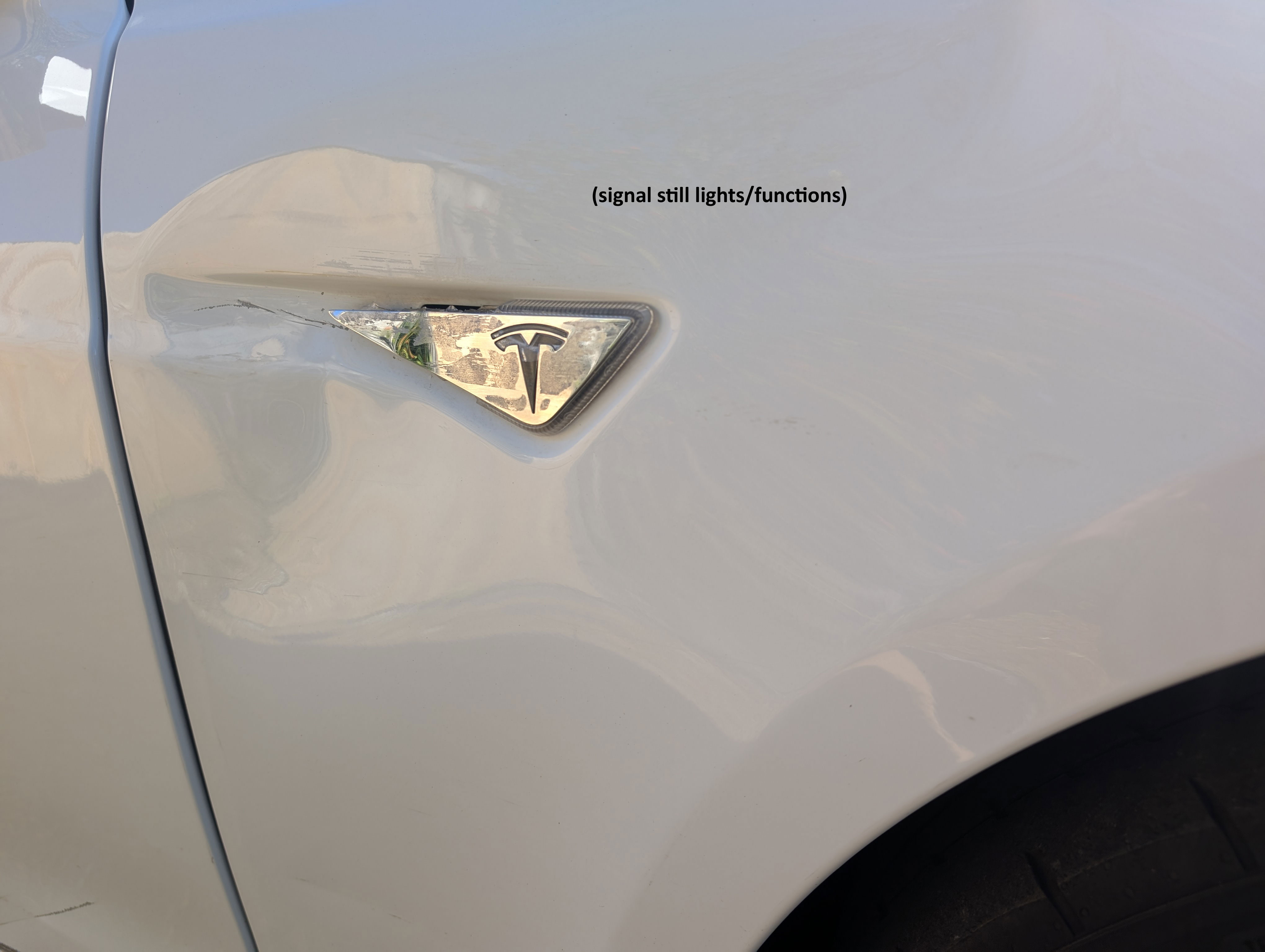
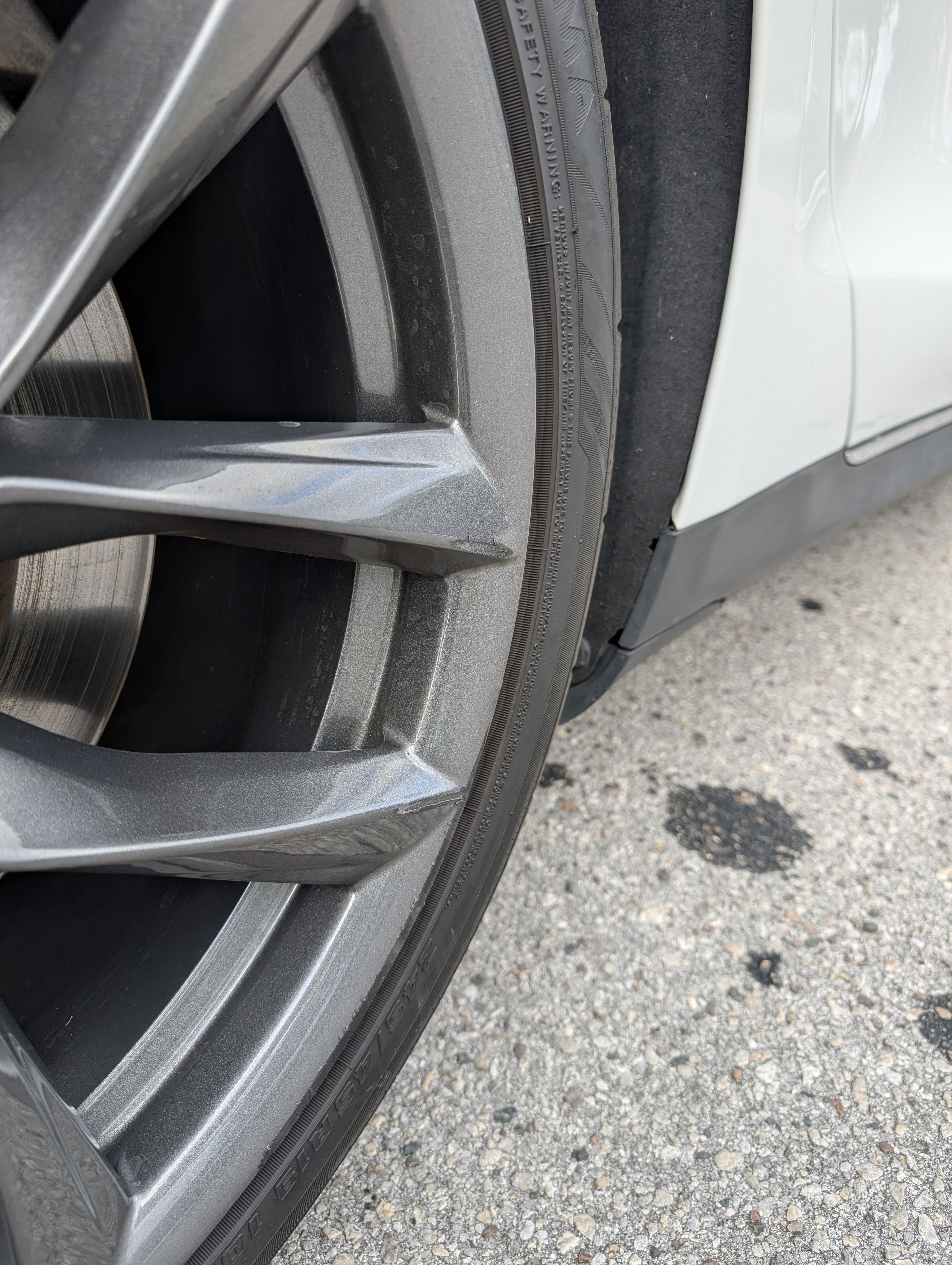
This Model S has cosmetic damage to the passenger front fender, side marker light, front door, and rear door from an accident and is priced accordingly. The car was very thoroughly inspected by Northwest Collision for mechanical, structural, and high voltage battery damage with none found. The door hinges are straight and the door closes perfectly. The door seals are still intact and do not allow rain or splashes to enter the car. Rims also have typical Tesla curb rash, plus damage from the accident. Long story short: the accident occurred in early June 2025 and the car was stuck in legal limbo (“preservation of evidence”) due to the person who hit me later claiming it was my fault and that he was suffering injuries. After four lawyers dropped him and the collision shop stuck my insurance company with a giant storage bill I was eventually able to retain it with a clean title, but at a much reduced settlement in late Nov 2025. The car remained in my possession throughout the process. I love this car and planned to keep it for many more years, but due to the circumstances, I felt pressured to purchase another Tesla while the insurance companies sorted this out for five months. Now I no longer need this Tesla. This one has always been well-maintained and reliable, and I made sure to keep up with it during the insurance battle. I am the third owner and the two previous ladies who owned it also took very good care of it. I purchased this car from a private owner in Sarasota in Feb 2021 for $28,500 with 48k miles on it.
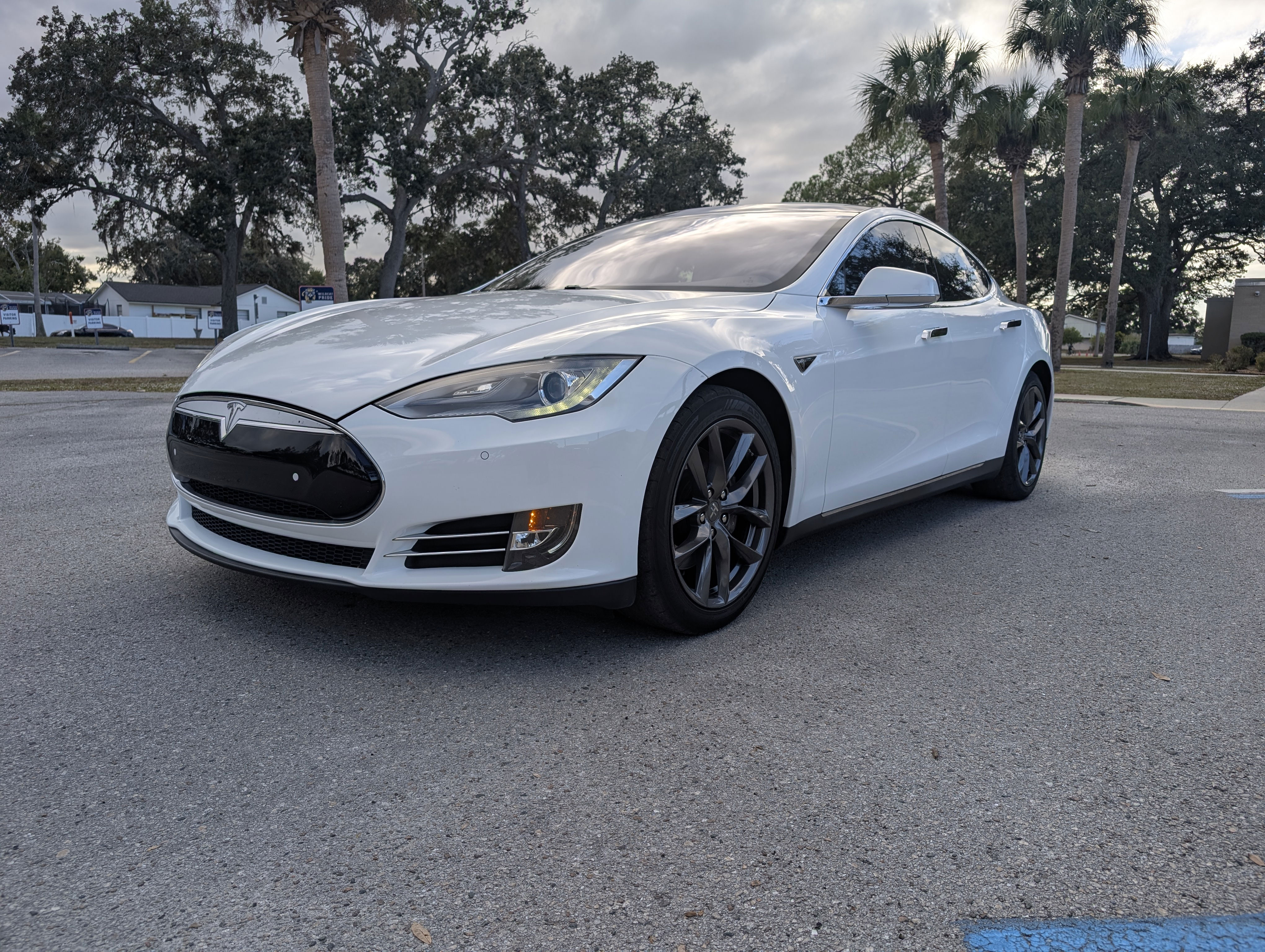

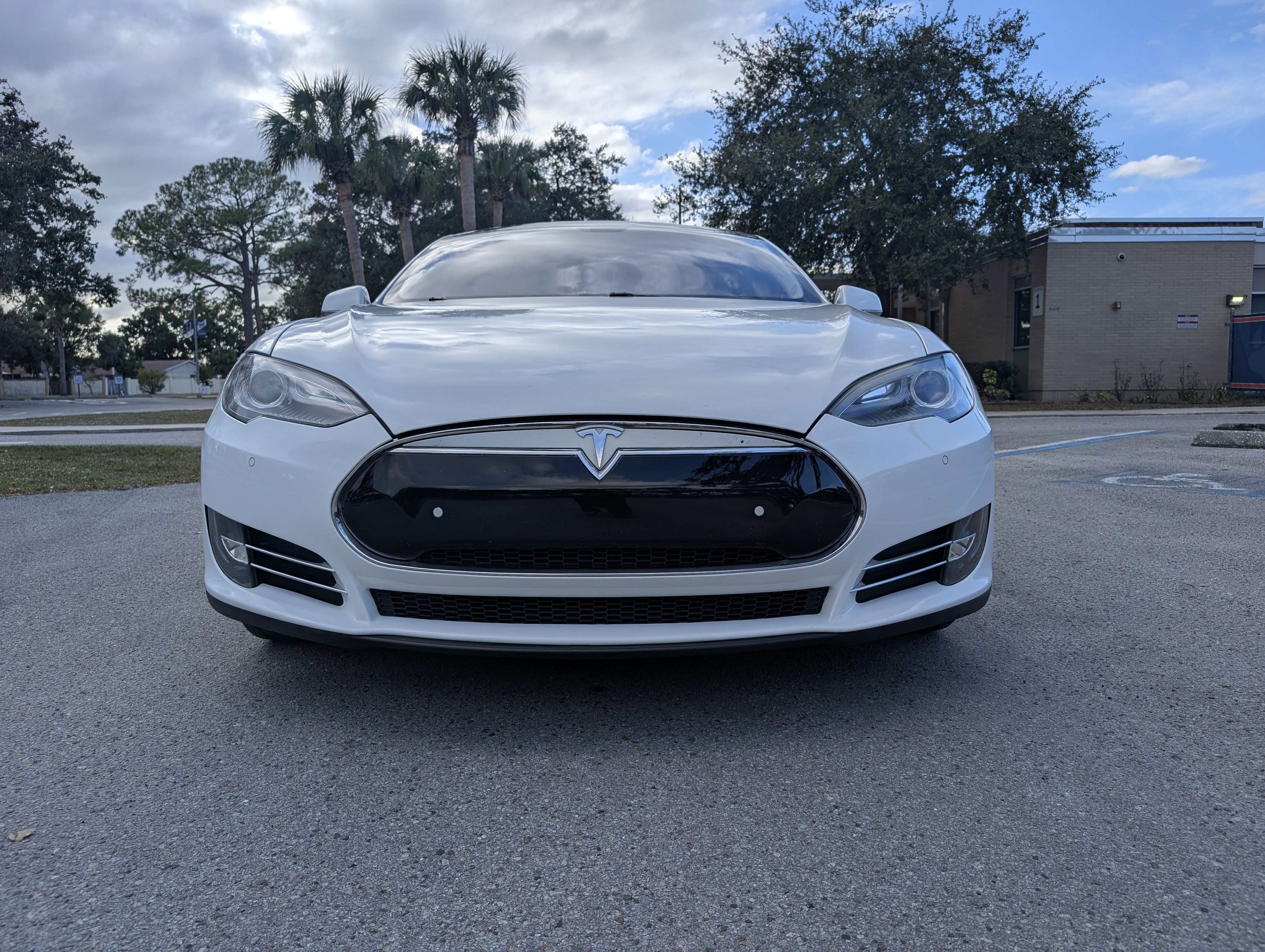
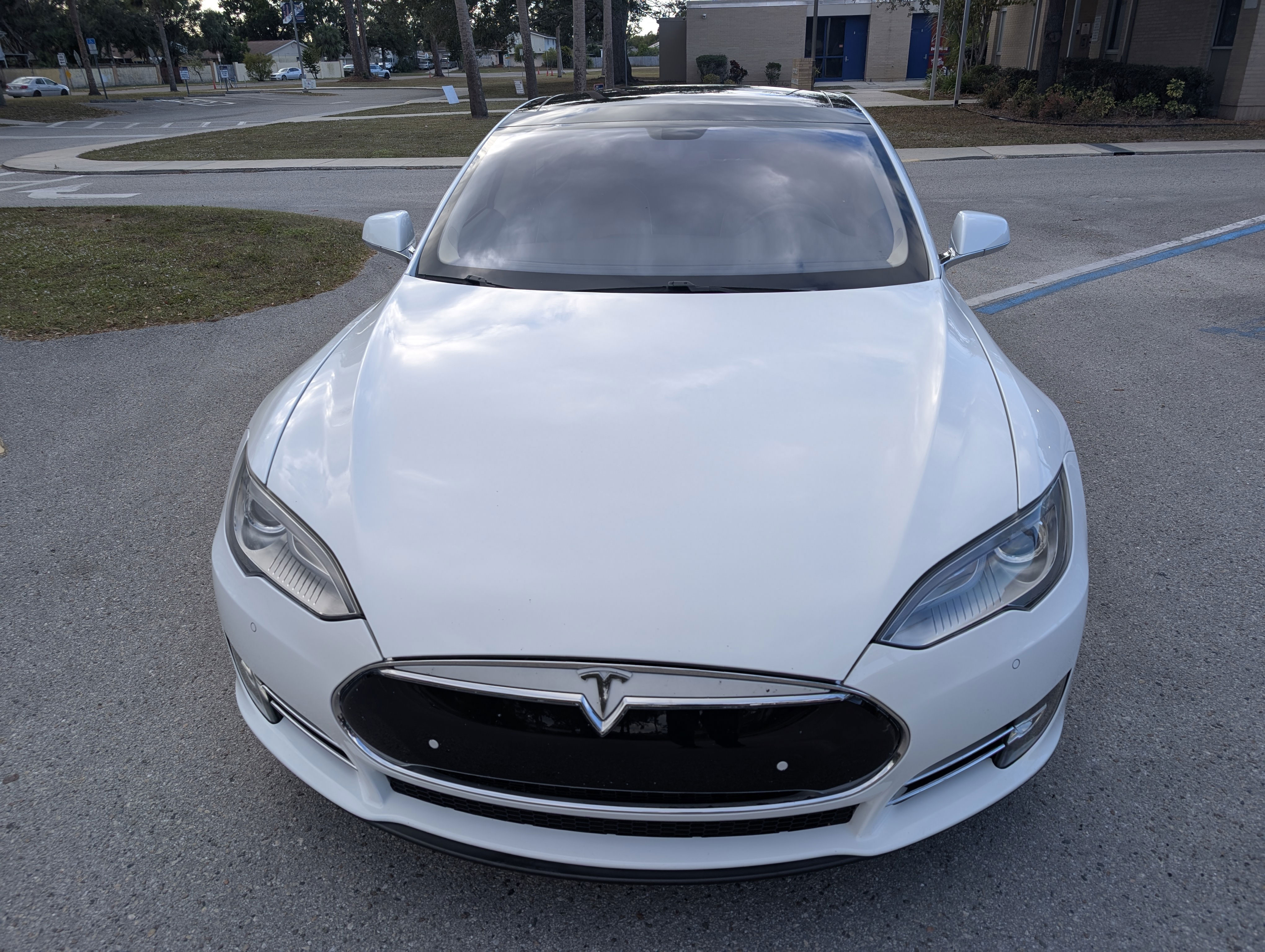
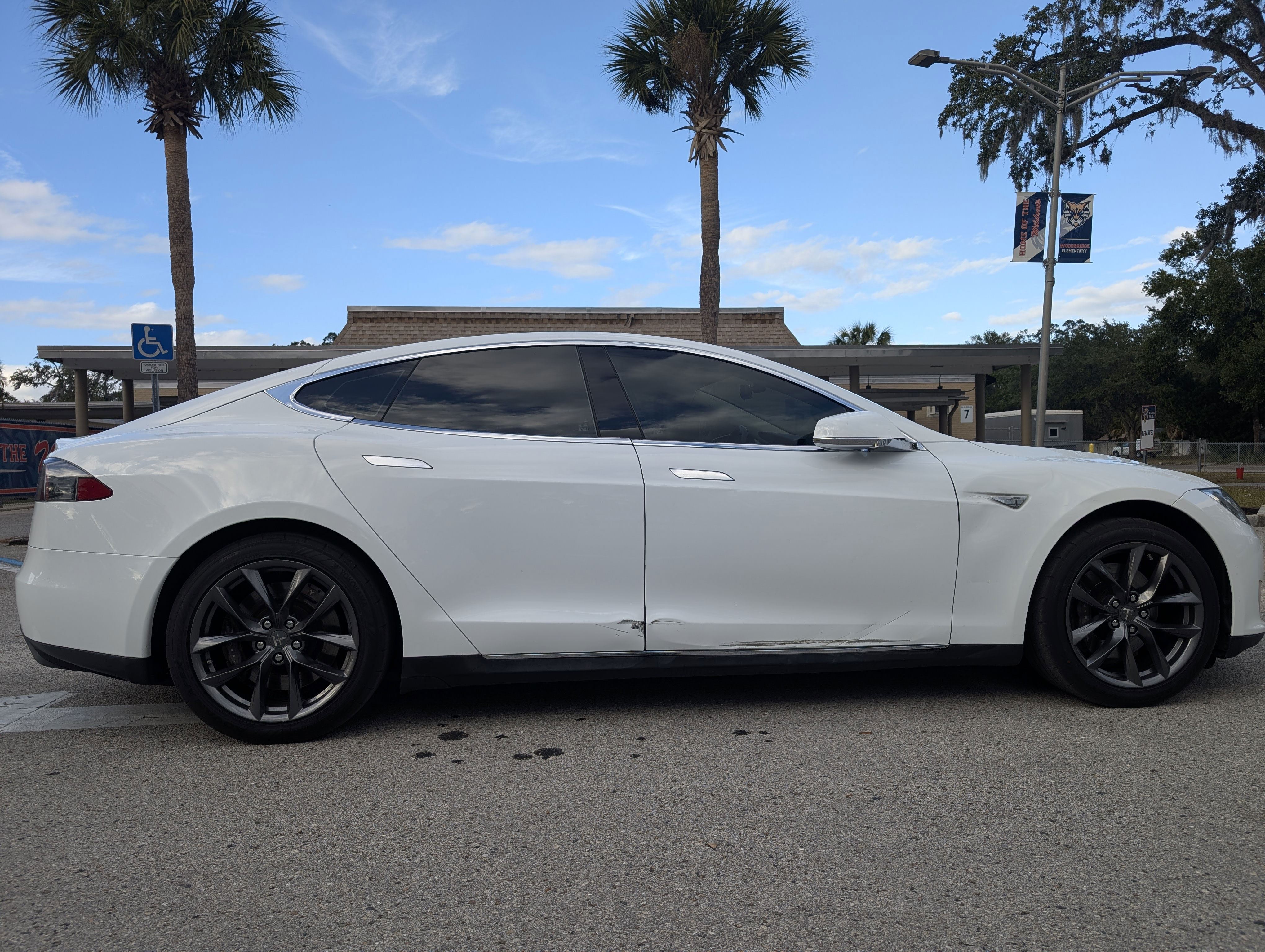

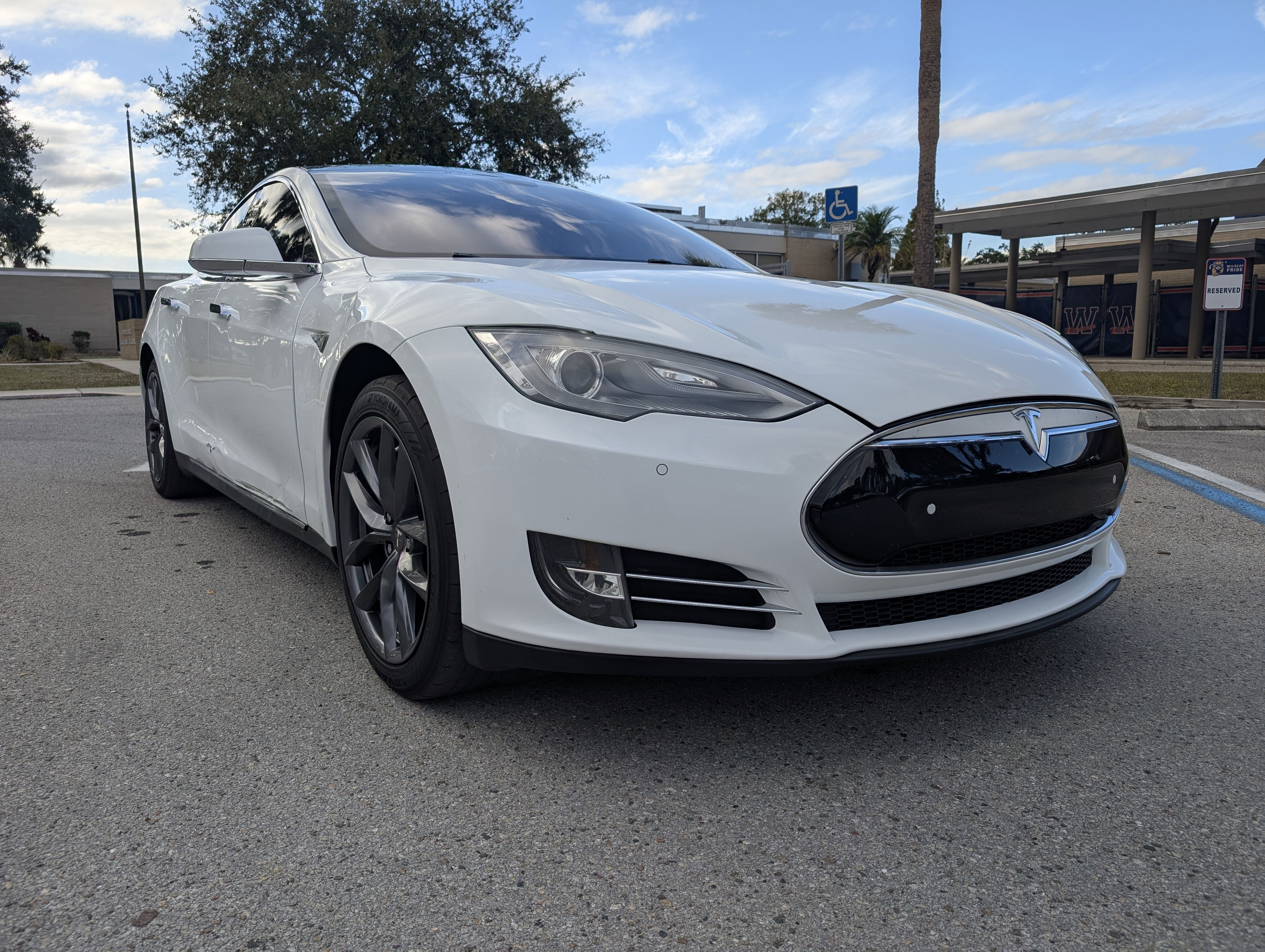
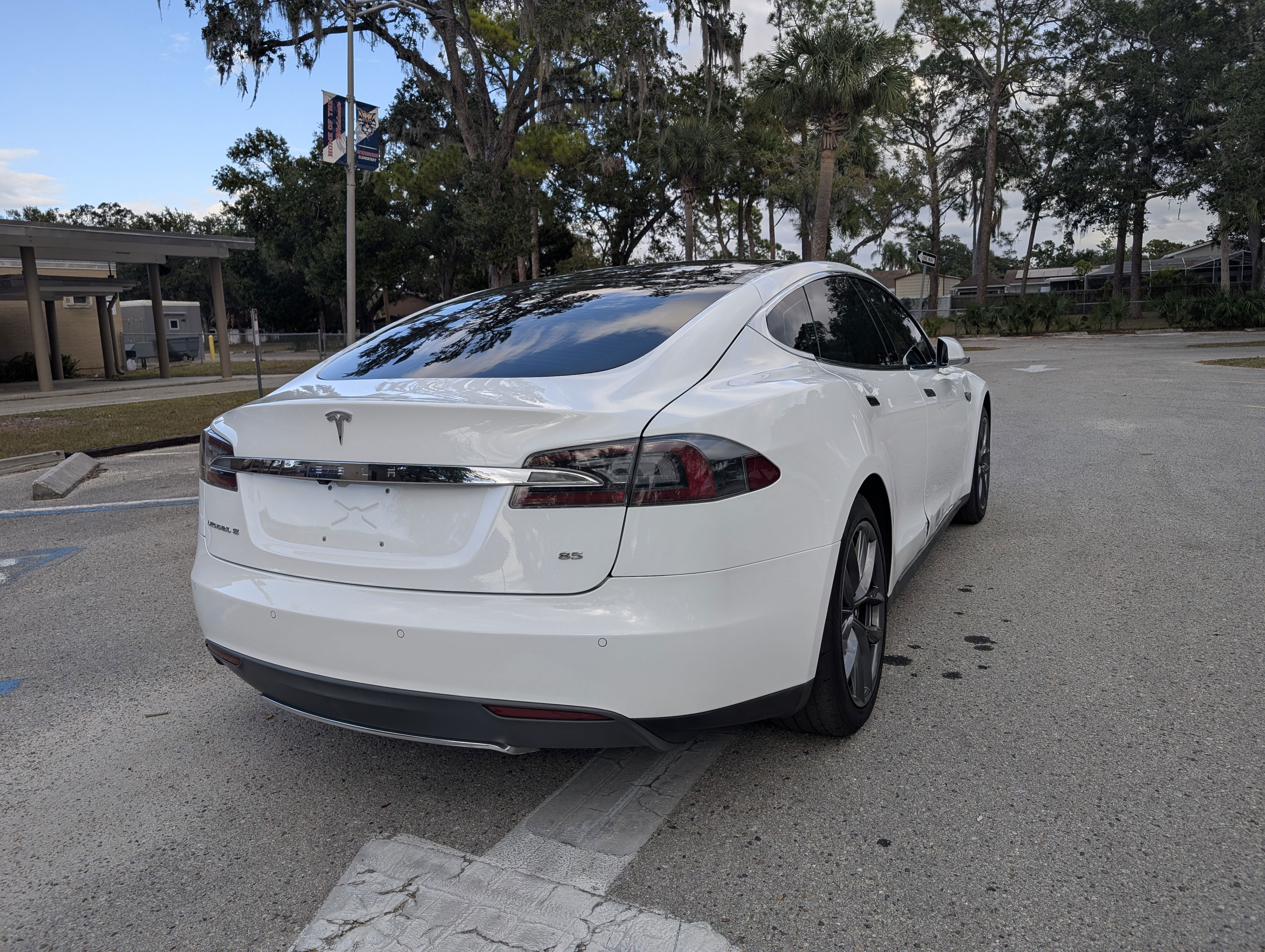





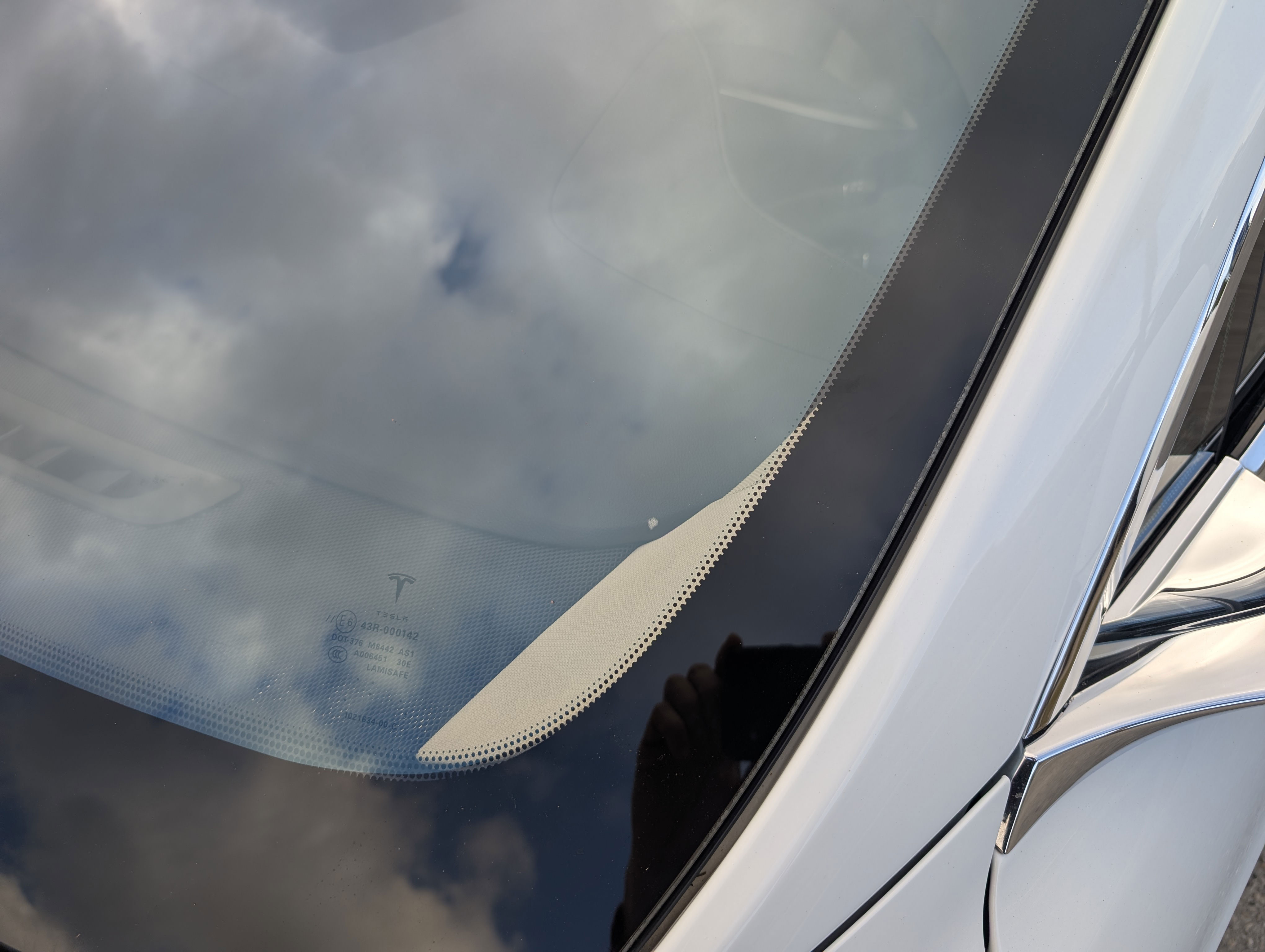

I was considering having the nosecone (grill area) painted white and wanted to see it first, so sprayed it with PlastiDip. I removed most of it. leaving the thin, white section across the top. If you don't like it, it rubs off with a dry paper towel followed by some Goo Gone.
FUSC & FUPC (transfers to new owner)
The Model S 85 is one of the more sought-after and bang-for-the-buck Teslas due to the price, the range, and the incentives of the period. Being the flagship series back then, all 85 models came standard with the SC01 option: Free Unlimited Supercharging for Life (FUSC) as a promotional offer. The SC01 perk is the most coveted option in the Tesla fleet since it is attached to the VIN and never expires. That era also included the promotional Free Unlimited Premium Connectivity for Life (FUPC), which is attached to the VIN as well and also never expires - this is normally $10 a month and provides streaming services, improved navigation, and real-time traffic via LTE cellular internet. Both options transfer to new owners through all private sales.
High Voltage Battery Condition & Range
The car's 85kWh pack has never been opened or worked on, and Scan My Tesla data is showing it as healthy. Software is up to date and there has never been a critical error to my knowledge. The previous owner and I rarely charged the car to 100%, which reduces stress on the battery. Leaving it between 20-80% helps limit the slow degradation of the battery that naturally occurs over time and/or due to heat. Surprisingly, this car is 5years older than my current one and they both have the same percentage of degradation. When new, the Model S 85 had a listed max city range of 265 miles. The current max range is approximately 233 miles, which means the battery condition is in the upper echelon of its peers. We also used Supercharging sparingly (fast charging adds heat) - the handful of times a year that I drove roundtrip from Tampa to Orlando, I would stop at the Lakeland Supercharger for 10-15mins on my return to add an extra cushion just in case. I am currently keeping the car charged to 70% to minimize stress on the battery while it waits for a new owner. Heat is a major cause of degredation, but Supercharging a cold battery can also cause accelerated degredation: if you plan to Supercharge, make it a navigation destination and the car will optimize the battery temperature prior to arrival.
12v Battery & Recent Diagnostics
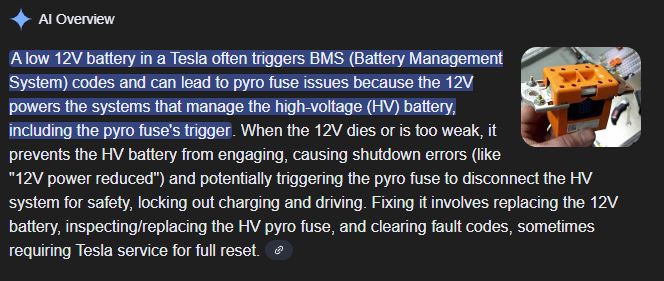
Immediately after a factory reset to delete my driver preferences early in Dec 2025 for a new owner, the car threw a pyro fuse code and shut down the next day. The new owner backed out. The Service Center determined the issue was an expiring 12v battery (not the high voltage pack). Expiring low voltage batteries can cause issues during hard resets and I confirmed this on the forums. My Service Center recommended that I replace the 12v battery every 3-4years since low/failing 12v can cause false-positive errors like this in any car, with Teslas being susceptible during resets and updates. The previous battery replacement was Nov 2022, so it would have likely given a warning code to replace it within the next few months like it had in 2022. The car went through a 30min diagnostic with no other problems or errors. Here is the overview of the error and the receipt:

Is There Autopilot & Warranty?
This car is not capable of Autopilot or Full Self Drive as it only has a single camera for backup and none of the other necessary hardware. The first Teslas that were capable of this came out in late-2014, and even those have outdated hardware. The lack of additional cameras also prevents the car from having the Dashcam and Sentry features.
The battery and drive unit warranty expired in 2021 and I drove this reliable car as my primary vehicle for nearly five years with zero issues. The car is being sold as-is and I am mentioning every tiny bit of history that I am aware of.
Large Drive Unit Replaced (RWD)
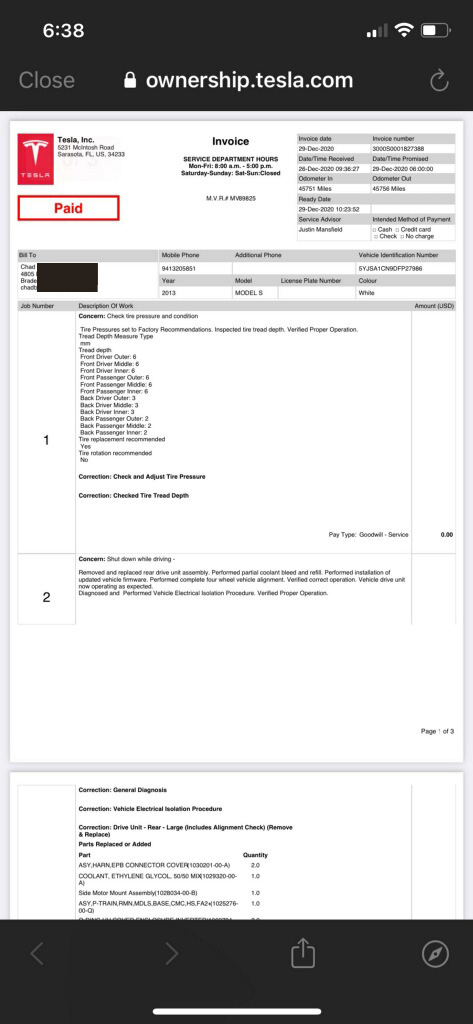
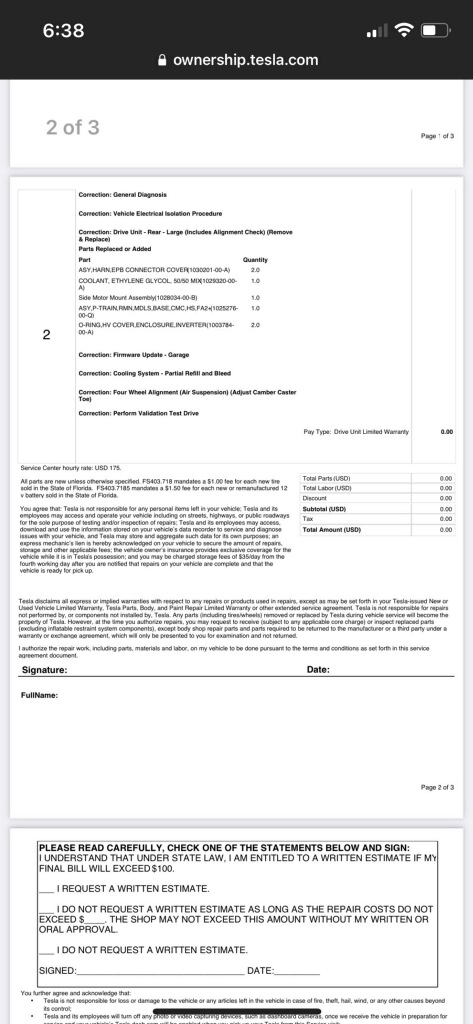
All Model S 85 cars came with a single rear LDU (large drive unit) for better acceleration over the 60 cars with a SDU (small drive unit). Unfortunately, every original-equipment LDU and warranty-replacement LDU that was installed from 2012 through 2023 will succumb to a coolant leak due to failing seals at the rotor shaft. This problem was not finally corrected by Tesla until “Revision U” of the LDU, which was implemented in Q1 2024. These leaks are inevitable as the rotor seals eventually wear, which allows coolant ingress and subsequent seizing of the rotor or shorting of the inverter. This leak tends to occur between 3-4yrs/30-50k miles and it requires a full replacement when the drive unit fails. The earliest warning sign is usually a faint whining from the rotor as corrosion builds up. In Dec 2020 (45k on odometer), the previous owner’s LDU shut down on him and Tesla replaced it under warranty with a Revision Q unit. The following two images are the receipt for that warranty work:
LDU Coolant Bypass Mod Installed
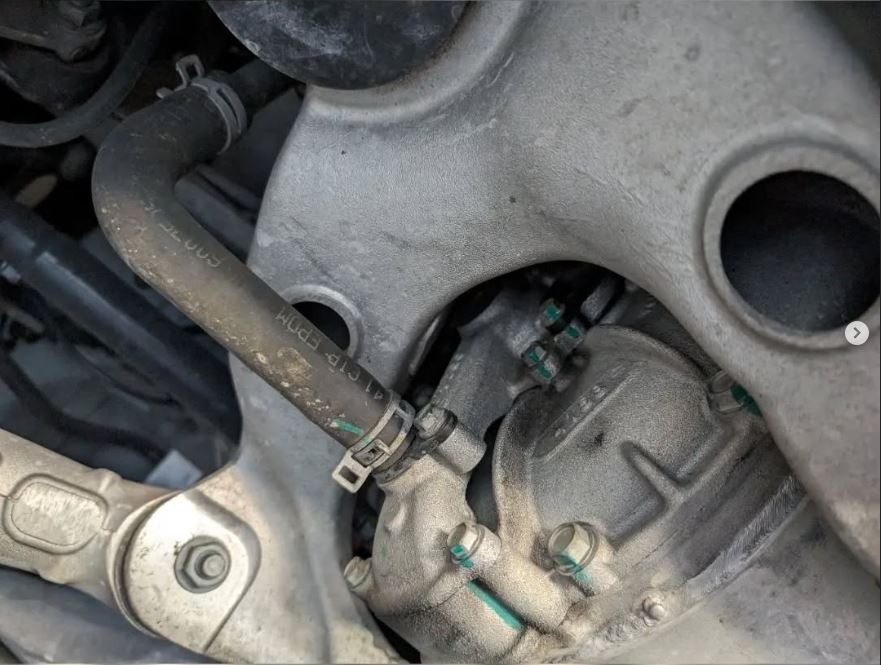
In late May 2024 (73k on odometer), I checked the condition of the seals of this remanufactured LDU by pulling the speed sensor as it neared 30k miles - the sensor was dry, which indicated the seals had not begun to leak yet. Since the leak is not a matter of if, but when, I chose to install the simple coolant bypass/delete mod with the drive unit still bolted into the car. This mod redirects coolant away from the rotor’s internal coolant tube, which is the problematic leak point. This also results in the removal of the 5/16” flyover tube that primarily helps bring the differential gear oil up to temp in cold weather (not an issue in Florida; plus, I properly bled this dead head). The overwhelming consensus is that the bypass will at the very least get you more life than doing nothing at all. In the RevU units, Tesla also bypasses the internal rotor cooling and instead made minor component changes to improved heat shedding. These 2023+ RevU LDUs run hotter than previous revisions, but Tesla deemed that acceptable and a much lower risk than the inevitable leak. Grok states that a reman RevQ with the simple delete tends to be more reliable than the reman RevU, with RevQ+delete potentially doubling the average lifespan of RevU units to 100,000miles - this is due to better quality control of RevQ-era stators, RevQ components tending to have less reman cycles, and potential gunk build-up in RevU gearboxes. Many owners who rack up miles faster than I do have implemented this exact coolant bypass mod and there have been no confirmed failures caused by it, with one reviewer claiming two 20hr trips between Florida and Ohio with no issues. RevU was the final revision, as Tesla moved on to the Raven and Plaid platforms with high-output rear SDUs, and non-Performance dual motor Model S/X vehicles had been using two SDUs (oil cooled rotors) since 2014. The following three pics were taken on June 7, 2024 and show the before, after, and the coolant bleed (you can cross-check the VIN number in the Infotainment section further below):
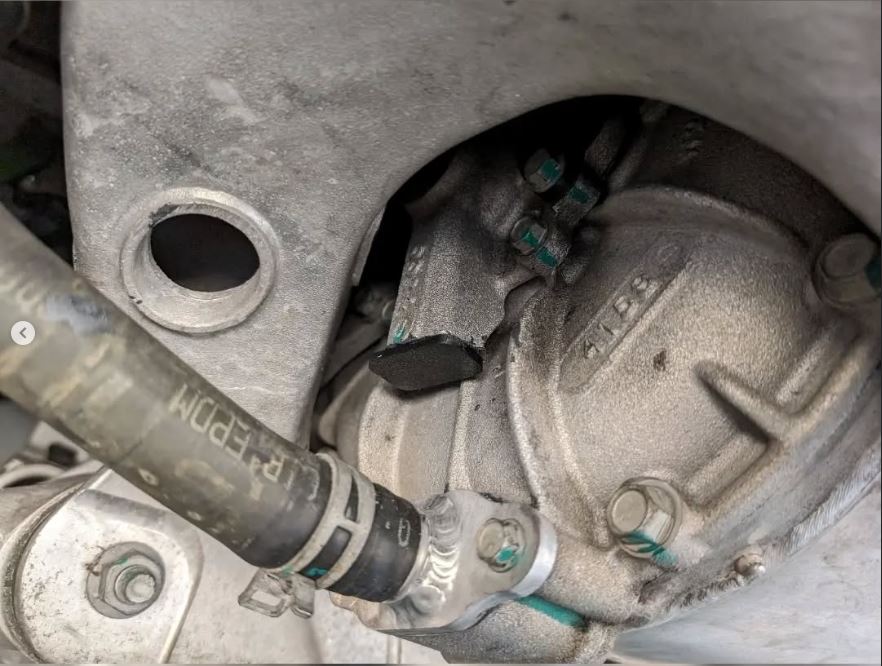
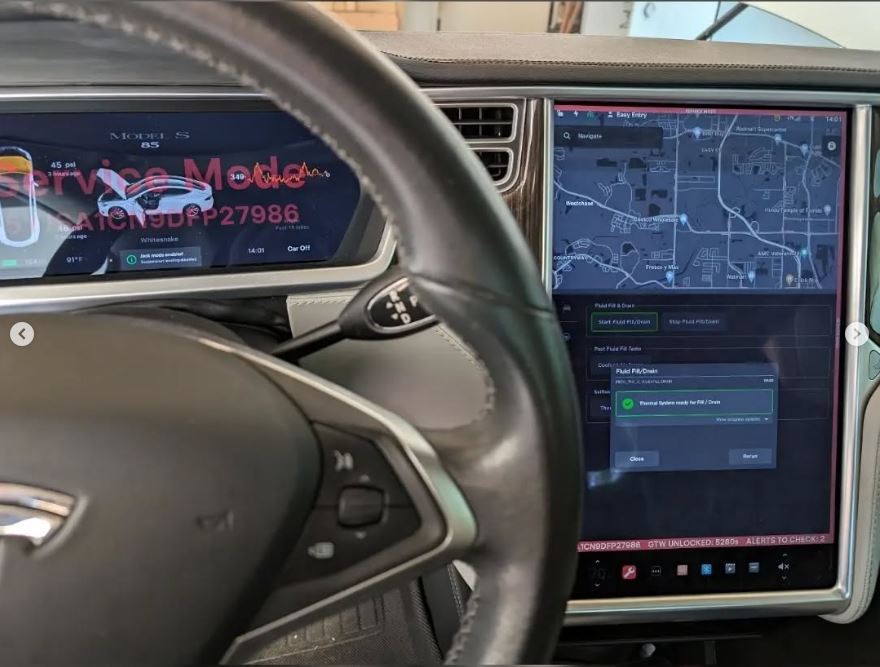
The retail information on the kit I used to perform the coolant bypass mod is here.
To clarify, this is a rear wheel drive only car - it is not a Dual Motor or Performance model.
JUST TO BE VERY CLEAR: if you are considering buying a Tesla with an LDU, and the current owner has not replaced the drive unit within the past 2yrs nor has addressed the coolant leak before it began, you are at high risk of a $5000+ repair within 20k-50k miles of the latest install.
Tech Package & Driver Features
The car was optioned with the Tech Package, the Smart Air Suspension (SAS), and the Panoramic Sunroof - I believe the only available options this car did not have from the factory were the premium sound system and third row seating. To me, the Tech Package is a necessity for these early cars as it would not feel modern without it. These packaged options eventually became standard on later Model S cars and included: Turn-by-Turn Navigation; LED Cornering Lights; Keyless Entry with Auto Present Doors; Convenience Lighting; Hi-Def BackUp Camera; Xenon Headlights (both bulbs replaced within the last 2 years); Fog Lamps; Power Liftgate; Memory/Heated Front Seats; Daytime Running Lights; Power Folding/Heated Mirrors; Chrome Accents on Rear Bumper and Front Intakes. The Tech Package also includes HomeLink to operate garage doors and can be set to close and/or open your door automatically as the car departs/nears the programmed “Home” address. Most of the settings can be programmed for different drivers, with their names being selectable on the Infotainment screen. The car was also optioned with Front and Rear Parking Sensors, which displays object range on the Infotainment and dash screens. It includes simple cruise control, not the tethered type. It has rain sense wipers, traction control (RWD), valet mode, along with selectable regenerative braking aggressiveness and steering wheel weight.
SAS
The Smart Air Suspension option allows the Model S to be operated at four different ride heights. The lowest is to reduce undercarriage drag to improve power efficiency and handling on the highway, which can be set to occur automatically at a programmed mph. It is also able to geofence areas on the map so the car will auto raise for clearance of driveway dips or parking curbs. Additionally, the system self levels front to rear for uneven cargo loads.

Panoramic Sunroof & Ceramic Window Tint
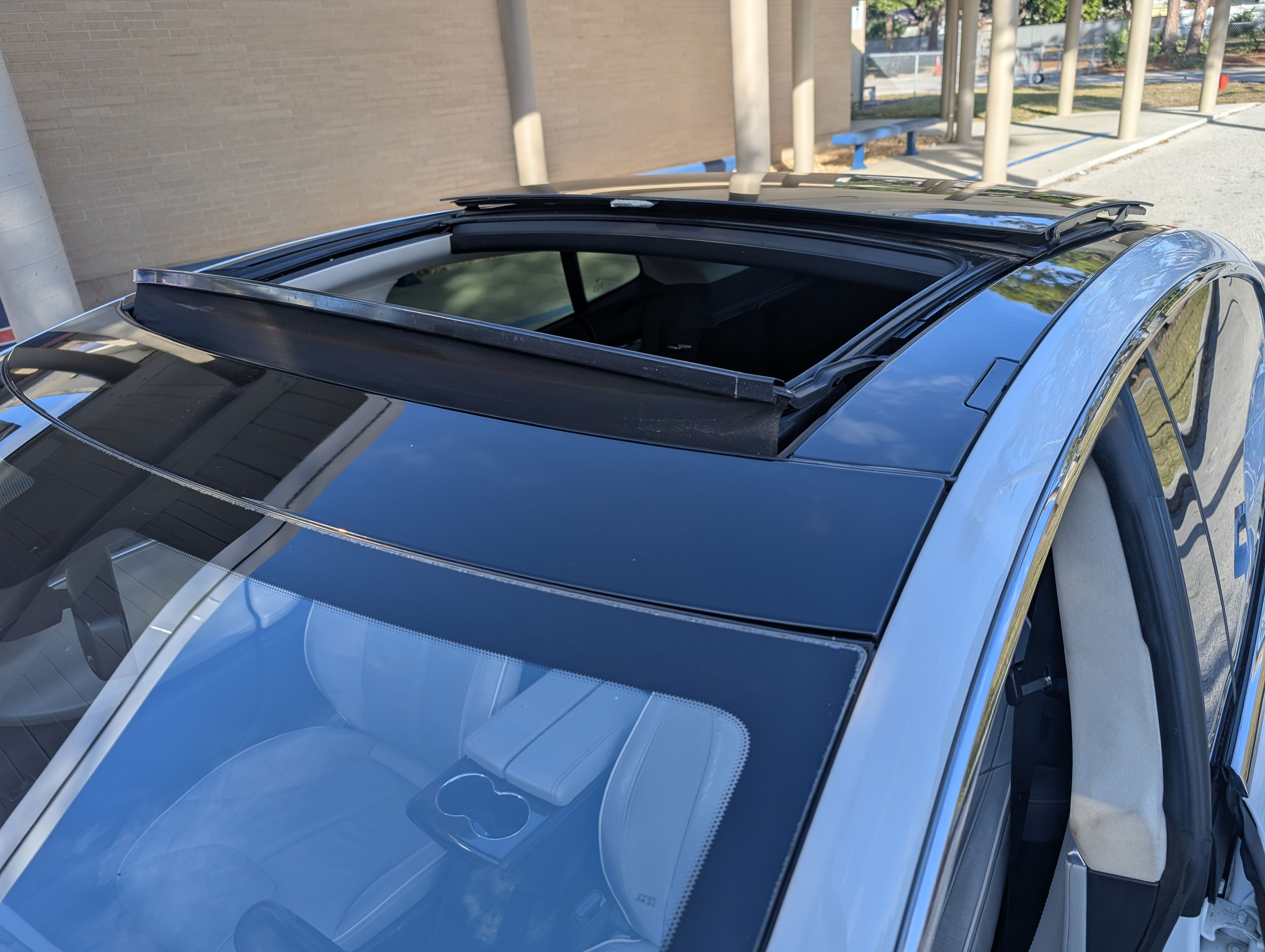
The Panoramic Sunroof was a $2500 option that was discontinued after 2018, mainly due to water intrusion issues from the drains clogging with dirt or kinking during assembly. This sunroof still functions and seals as it should and comes tinted from the factory. The sunroof should be greased every 1-2yrs and Tesla advises to only use Klubersynth or Molykote Noise Reducation Grease (it must be plastic safe and not petroleum based). The 30% front tint and 15% rear tint was added Aug 2019 by the previous owner. The tint has a lifetime warranty, looks great, and I still have the receipt from a shop in Sarasota in the glovebox.

Infotainment MCU2 Upgrade
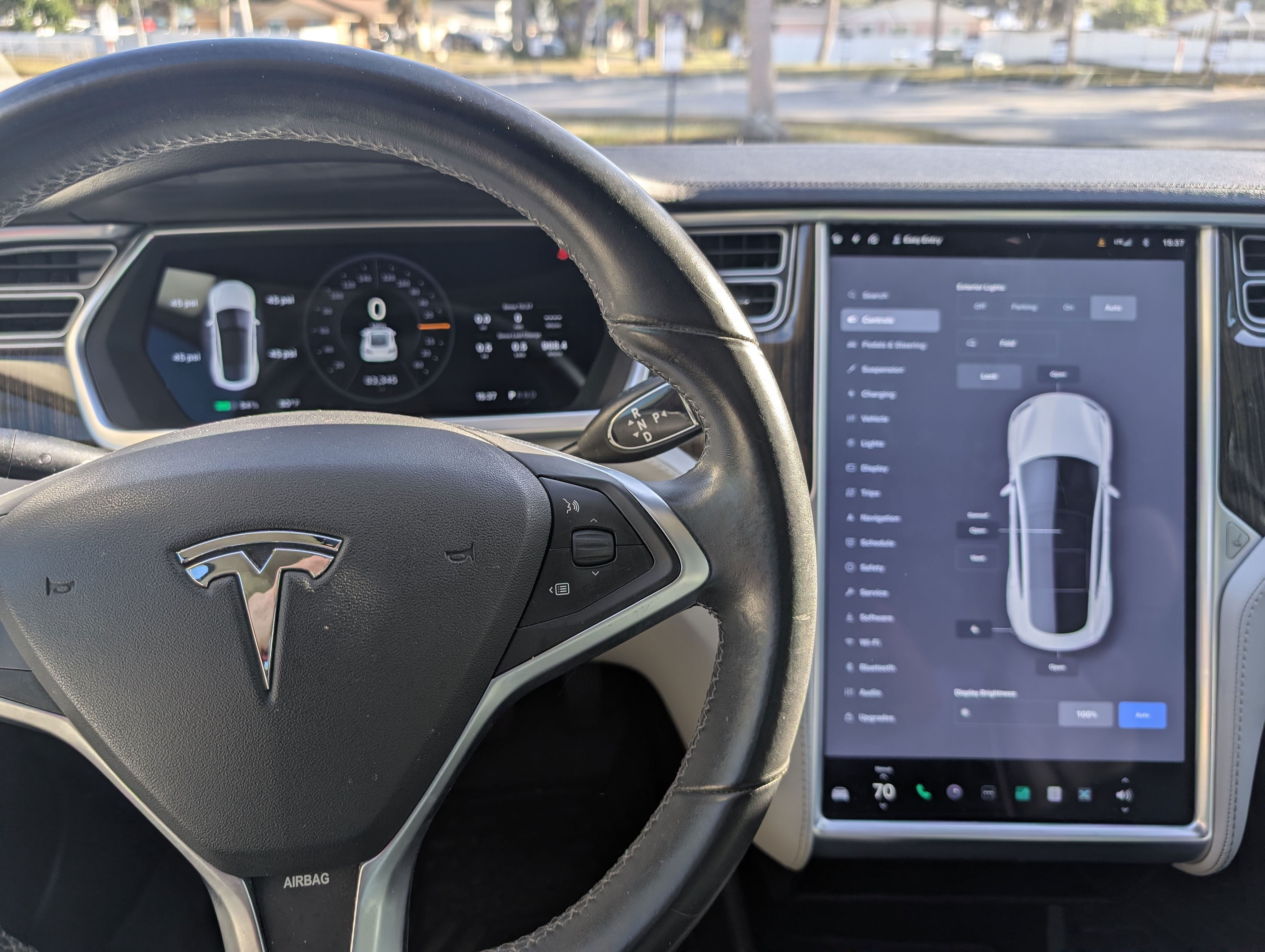
In January 2022, I upgraded and replaced the original MCU1 Infotainment (the 17” screen and computer brain) to the MCU2 to allow the car’s cellular to function over LTE. Gen1 Model S cars without this upgrade may not connect to cellular internet as the MCU1 was designed for the now-obsolete 3G connectivity. This upgrade also improved resolution, processor speed, touch response, and fixed the embedded multi media card issue of the original MCU1 that caused critical errors (there was a free recall on the eMMC, but the recall did not upgrade the entire MCU). During the recall, the upgrade cost me $1500 and was a noticeable improvement - unfortunately, I cannot find the receipt for this. I believe they also replaced the in-dash display as part of this upgrade to match the new 17” screen’s resolution. The Infotainment will Bluetooth-connect to your phone to stream music or share texts and phone calls. I believe this is actually an MCU2.5 model since I acquired it after 2021. VIN number is in the second pic.



USB
There are two USB outlets and a 12v cigarette outlet below the arm rest. These can be used to charge devices, plus you can plug a USB drive loaded with mp3 music into them to play through the car stereo.
Wheels & Tires
The original owner took Tesla up on a special offer for 85 buyers to later upgrade to the attractive 21” staggered Arachnids. Due to issues with potholes dinging the rim lips and taking chunks out of the sidewalls of two of the Michelin Pilot Sports (this is a common complaint about all 21” wheels), I sold that wheelset to buy 19” square Arachnids from T Sportline in Nov 2022. The 19” wheels provide a smoother ride and I have not had pothole-anxiety since. Interestingly, there was no noticeable Wh/mi difference between the 21’ and 19” wheelsets. Although all straight and true, the current wheelset does have curb rash and some scratches/damage from the accident, but don't look much worse than the typical set of Tesla rims. Alignment is straight and there have never been any abnormal wear issues that some owners complain about, which is usually caused by knocking the suspension components out of spec on really hard bumps. The Yokohama Apex tires currently on the car are very near the wear markers, and might provide 500-1000 safe miles with tempered driving. I have a brand new set of tires and can sell them for $700. These 245/45ZR-19 Vredestein Ultrac Pro XL are $850 a set and should last longer than the 21” Pilot Sports and 19” Apex I’ve tried, which both got me the expected 20k miles per set.

Mechanical & Cosmetic Condition
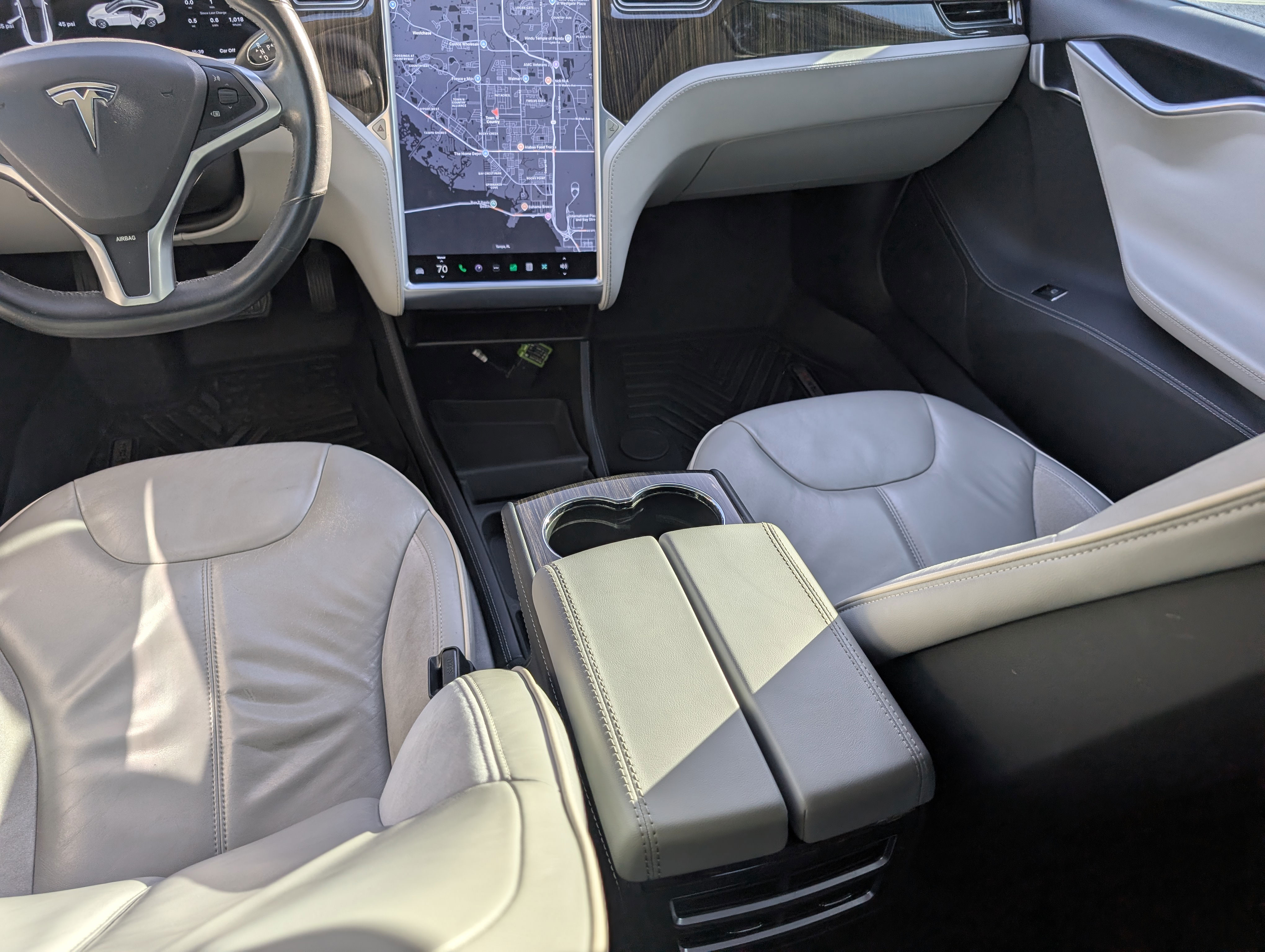
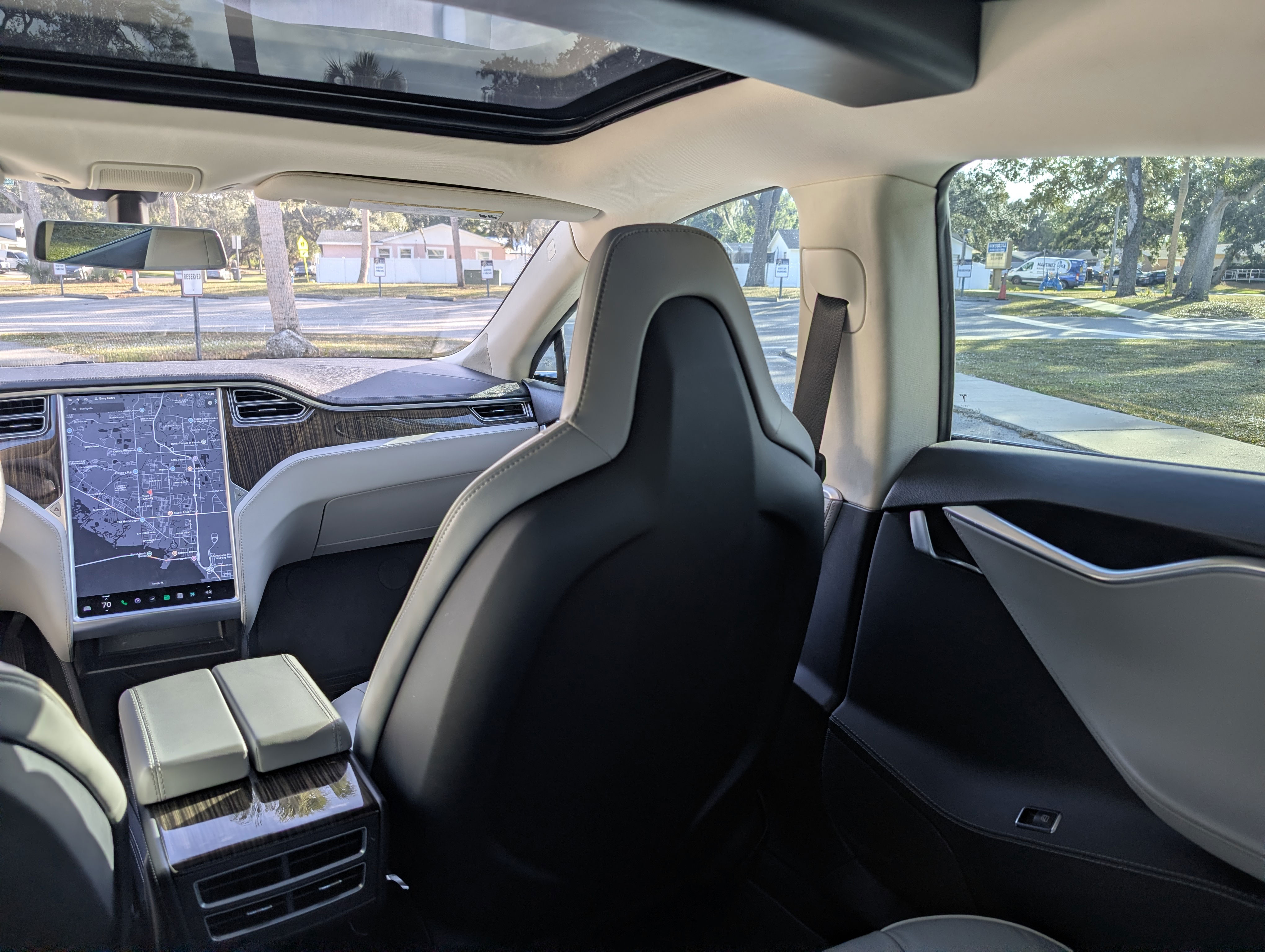
The car drives, accelerates, and stops smoothly - the power delivery is predictable and refined, and the brakes are balanced and very impressive. It actually tracks straighter and might brake more-evenly than my newer Tesla, which supposedly had an alignment done just prior to my purchase. I swear there's faint chatter in the steering wheel of the newer one that I didn't feel in this car. All features and lights work as they should. There are no strange noises or issues from anywhere in the car. There are body gap and window misalignments on my 2018 Model S, which became a common issue as demand peaked in that era - however, this 2013 Model S was assembled with much more care. This car also spent most of its non-driving life in a garage and has never been in the snow. Be aware that, along with the mangled passenger side from the recent accident, it still has some chips and scuffs here and there from 80k miles of driving and public parking. During the insurance battle, the flatbed driver scraped the underside of the rear bumper accent (chrome) on the street while backing it down - though the damage is out of view, I did my best to sand it to look less chewed-up. Overall, most people are shocked to learn the age of the car. The color is Catalina White (paint code: PBCW) and the interior has the Grey Performance Leather Seating (“Performance” simply means it has Acantara bolsters for added butt-grip). For pushing 13yo, the interior is in excellent condition with no seat tears or holes. The minor interior issues that I see are a tiny “split” in the top dash leather near the driver-bottom corner of the windshield that looked the same when I bought it (only you and I will ever know it is there), the glue that holds the interior material onto the front doors has begun to let go, and some black scuffs on the headliner from tires while loading bicycles in through the back.
Cargo Space
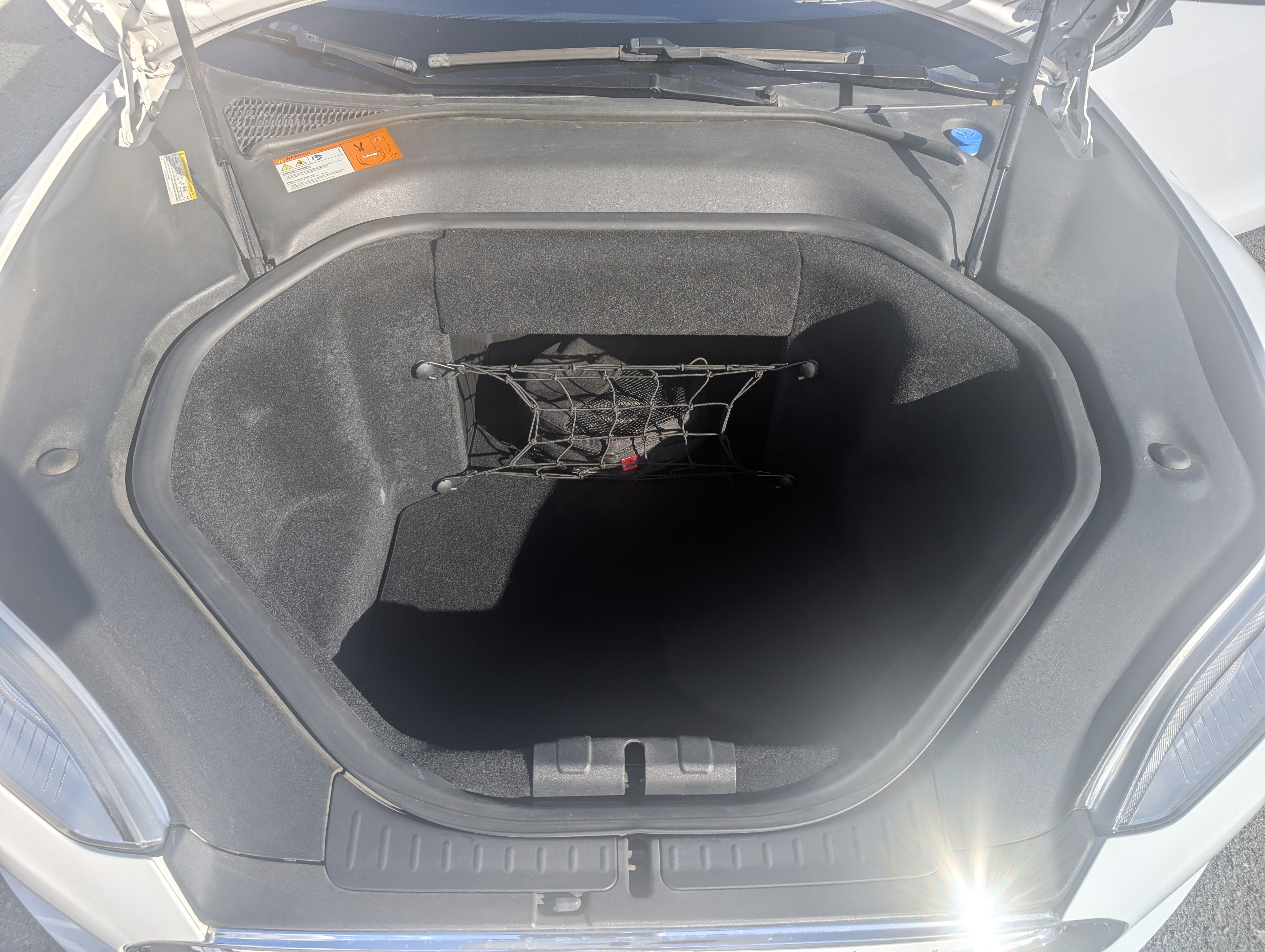
This is a station wagon disguised as a sportscar with a timeless silhouette, and that's mainly why I bought another one. The back seats fold down, which allowed me to either put two assembled BMX bicycles in the back or easily place a full-size mountain bike in there. Since it has a single drive unit, it also has the big-ass frunk that boasts more space than many cars’ trunks.
Home Charging
The included connector is the original Gen1 UMC (Universal Mobile Connector) and it has the 15A rated adapter attached. The UMC “connects” the outlet to the car’s onboard charger. Expect to get 3miles for every hour on a standard 15A rated home outlet. After a few weeks of range anxiety, I added a second 30A clothes dryer outlet to my house’s fuse panel and bought the 30A rated adapter. This brought my charge rate up to 17 miles an hour, which has been more than adequate. I recommend that you plan for a similar setup or get the Wall Connector, since home charging is better for battery longevity than Supercharging and it also allows the car to balance the cells.
If you want to use your clothes dryer outlet or plan to add an outlet, you’ll need a different adapter which can be found here. This car does have the early onboard charger, so it can utilize full power from a 50A rated source. However, I would advise against using any 50A rated adapter (except in a pinch) with the Gen1 UMC as this combination was found to be at risk of overheating the connector. The Gen2 UMC cannot fully utilize a 50A rated supply and will step everything down as if it was a 40A rated supply. If you install the Tesla Wall Connector, it will step the 60A rated supply down to match this older car’s onboard charger. Used connectors with adapters are prevalent on Facebook Marketplace for around $200 - I have my main UMC in the garage for daily use, and then a spare one in the frunk for traveling emergencies. If you're new to EVs, I will be happy to help you figure out the best option - I'm usually going to recommend wiring up an additional 30A dryer outlet. But be aware, if you live in an apartment and only have access to a standard outlet, it will likely fall short of your needs.
“Rated” - all outlets have a rated amperage, but operate on a continuous output amperage. The continuous output is 80% of the rated amperage for safety codes. The rated amperage is the overhead in case there is a spike. So a 30A outlet only actually supplies the connector and the car with 24A of continuous power. 40A rated = 32A continuous. 50A rated = 40A continuous. The majority of 2013 Model S 85 cars, which includes this one, max out at 40A continuous. Newer cars can accept 48A continuous from the Wall Connector, but the Gen2 UMCs only allow 32A continuous to flow through them. Yes, it's a bit confusing.
Issues I Have Corrected
Both front window regulators (the track assemblies that guide the window up and down) have been replaced within the past two years - the regulators can deteriorate and not allow the window to fully close on its own. Both front door handles failed in 2022 and have been corrected - the Gen1 factory originals used stiff wire that repeatedly bends and eventually breaks, so I replaced those wires with pliable silicone-jacketed strand wire (this is how Tesla builds the new ones). The 12V battery was replaced in Nov 2022 (and then in Dec 2025). The early cars had issues with a poorly placed A/C drain allowing water to collect that could seep into the electronics, but I extended the hose to divert this condensation out to the passenger wheel well years ago. Mid-2021, I realized the foam suspensions had deteriorated on the factory 6” speakers in the front doors, causing crackling noises. I replaced them with a pair of PowerBass OE-652 2-way speakers from Crutchfield. These slightly larger 6.5” speakers maintained the factory 2-ohm requirements.
Other Notes
The car had a hidden 2” TorkLift EcoHitch for a bike rack, so there is a 4x7” hole under the rear bumper which provided access to install the hitch assembly. There is/was no trailer wiring. I still don’t know why, but the driver’s memory seating doesn’t always save the newest setting or for very long. It gets really close, but I would eventually have to do one little tweak each time I got in - my 2018 Tesla has done this as well! There was a little-known option in 2013 to allow doubling the intake amperage to 80A continuous from home charging by adding a second onboard charger within the car, but this car did not have that additional onboard charger installed. Tesla realized in 2014 that this benefit was not practical since most homes were not designed to easily accommodate a 100A feed. There have been issues with some Teslas wearing out rear tires very quickly - this was, and is still sometimes blamed, on the aggressive camber stance (common feature in many cars in the sport-luxury market) with aftermarket companies offering parts to reduce this camber. But after an investigation on their test car, Edmunds found the issue to be that the toe adjustment of the rear can get bumped out of alignment and into a toe-out situation that will cause excessive wear. The proof of this is that this 2013 Model S has never suffered from that despite the aggressive camber, even with staggered rims, high performance tires, and lowered suspension traveling back and forth to Orlando. So if excessive wear does occur, it is probably from an impact and will require a toe alignment. The battery packs of cars built prior to Q1 2015 are susceptible to water intrusion from driving through deep water or heavy splashing allowing water to enter through the pack’s vent ports, so always be mindful of standing water.
Maintenance
The only real regular maintenance items for this car: tire rotation; alignment check (this car does not currently need one); cabin air filter replacement (last replaced Feb 2024; every 2yrs); lubricating the brake calipers; lubricating the sunroof; brake fluid test to determine if the fluid needs changed (never done in my possession). The brake fluid lasts much longer in EVs since the battery regeneration is helping to stop the car, reducing the heat cycles of the fluid while also greatly reducing pad and rotor wear. Telsa once insisted that the A/C desiccant bag be replaced every 2years on the early cars before they started using heat pumps. This has been changed to a recommendation with service centers now supposedly rarely performing this task. Forum consensus is that this is never advisable unless there is a problem or the A/C system was installed improperly. The battery coolant and the LDU fluids have no scheduled replacement interval, only requiring attention if an issue occurs, with some owners feeling a need to do this at 100,000 miles. I can attest that the LDU on this car does not have any oil leaks, nor have I ever noticed or smelled a coolant leak. I topped off what I spilled and bled the coolant during the coolant bypass mod - I was even able to properly fully bleed the flyover plug, which many DIYers likely do not do. I recently discovered that the 12v battery should be replaced every 3-4yrs, regardless if there is a warning or not, so plan for between Dec 2028 and Dec 2029 - the car should advise you, but don't count on it (it warned me the first time, but not the second time when I did a reset).
The App
If you’re not familiar with Teslas, the app allows you to see exactly where the vehicle is and remotely operate many functions of the car. And “remotely” does not mean within eyesight - the functions will work from across the country via cellular service. Some of these are unlocking the car, starting/turning the car on (fobless operation), activating/adjusting the A/C and heated seats, opening the trunk/frunk, adjusting charge limit, and opening/closing the sunroof. It will also show you the car’s location, down to the orientation in the parking spot. If someone is driving the car, the app will display their speed and track them on the map.
The car has a top speed limiter that can be locked with a 4-digit code. A parent can speed-lock the vehicle and still allow the car to be fully operational otherwise, including via the app.
Included Accessories
Two Key Fobs (both function, but one has an issue where it drains the battery in a few days)
OBD2 Dongle and Bluetooth Adapter to monitor the health of the battery (Scan My Tesla app)
Spill Resistant Floor Mats
Center Console Organizer
Gen1 Universal Mobile Connector (charger with standard 15A adapter included)
J1772 Adapter (this allows the car to accept power from third-party Level 2 chargers)
* * *